.png)

From The Archives: Festive Football Part 1

The move to a summer football season in 2003 has had many benefits to the League of Ireland. One disadvantage is the loss of the traditional Christmas matches that were common for over 75 years. In the first of a three part series, dundalkfc.com reflects on some famous festive matches over the years and also looks back at what was happening in the town at the time.
Dundalk 3-1 Athlone Town, Free State Shield, 26th December 1927.
Dundalk recorded an impressive 3–1 victory over Athlone Town in the Free State Shield at the Athletic Grounds on St Stephen’s Day, 1927, in a match that was notable as being the first match that Dundalk appeared in white jerseys having moved away from the GNR black and amber.
The Dundalk Democrat’s Sideliner reported: “In their new white shirts and blue knickers, the Dundalk team looked an unusual lot, and there were enthusiastic fans who did not know their favourites for the opening quarter of an hour. The change is a very beneficial one, for the team looks a tight one all over. The “All Whites”, though between ourselves, they are not all white, for they have the Dundalk arms in a neat blue crest, looked better than ever. I hear that Messrs. McClean & Dearey did the outfitting.”

On the field, Dundalk made a strong start and were two goals to the good by half-time. New signing McGinn quickly justified his inclusion by opening the scoring. Eddie Carroll added the second when his shot found the net with the help of a deflection. Athlone responded before the interval when Ghent and McKenna combined to set up Henry, who reduced the deficit to 2–1.
Dundalk asserted their control again in the second half and sealed the win with a well-worked third goal. Toman and Carroll combined to create the opening, allowing McGinn to score his second of the afternoon and underline his impact on his debut. The Irish Independent singled out McGinn for praise, describing him as a “conspicuous success”.
Post Match Event
Following the match, Dundalk FC hosted a well-attended “Smoking Concert” at Foresters' Hall. Sideliner reported that it was a “a most pleasant night…between songs and toasts and exchanges of ideas the night passed very quickly…One of the outstanding events of the night was the speech of Fred Barrett in a strong appeal to the players [before] the Cup match with Rovers. Fred is thoroughly optimistic, and the players pledged themselves to do their very utmost to retrieve the good name of which the Rovers deprived them in the League.”
Fred’s speech worked a treat. Following another victory over Athlone in the final match of the Free State League, Dundalk drew 3-3 with Rovers at Milltown in the Cup before beating them 4-1 in the replay on the 12th January.
In The News/Around Town
A strike of GNR woodworkers is resolved after they agreed to a pay cut. Meanwhile, Dundalk Town Hall sees productions by William L Dobell including "The Ringer" and "Charley's Aunt". For Cinema goers, the Park Street Picture House is showing Millionaires starring George Sidney. On St Stephen's Night, dance events were held in the AOH Hall, Jocelyn Street and the Gaelic League Hall at Seatown Place. Dundalk: James Vennard, William Emerson, Fred Barrett, Gordon McDiarmid, Alf Jordan, Thomas Leeman, Maginn, Bill Toman, Eddie Carroll, John Mathieson, Andrew Kane.
Dundalk 7-2 Cork, League of Ireland, 27 December 1936
Dundalk produced one of the most emphatic league victories in their early history with a stunning 7–2 win over Cork at Oriel Park on Sunday, 27 December 1936.
Dundalk clearly reacted against the disappointment of losing the Leinster Senior Cup Final to St James’ Gate at Dalymount one day earlier. The Irish Independent noted that: “although they had played a Cup Final the previous day, Dundalk were worth their 7-2 win…showing no trace of leg weariness they ran the Cork defence off their feet in the first half.”
Dundalk were dominant from the outset and raced into a commanding lead within the opening half-hour. Hugh Morgan struck twice in the opening nine minutes, first finishing after Lennon’s cross evaded the Cork defence and then scoring from close range.
Mick Lennon added a third on 20 minutes after good work from Donnelly and Morgan, before Jim Mailey unleashed a powerful shot on the half-hour that gave goalkeeper Harrington no chance. Lennon struck again six minutes later after being played clear by Donnelly, completing a blistering first-half spell that left Dundalk 5–0 ahead.

Cork pulled a goal back shortly before the interval when Rouse followed up after Tizard had saved from Thompson, but Dundalk resumed their dominance early in the second half. Gerry McCourt made it 6–1 after Harrington could only parry a fierce drive from Mailey, and although Rouse scored again from a Thompson cross to make it 6–2, the outcome was never in doubt.
Mick Lennon completed his hat-trick on 75 minutes, finishing from close range after Mailey beat McCann and crossed from the wing. Dundalk could also afford to see Joey Donnelly hit the post from a penalty while the score was 6-1.
In The News/Around Town
The news was dominated by stories from the Spanish Civil War. The local news was focused on the resolution of a three week strike at Connolly’s Boot Factory at the Demesne when the workers agree to management’s proposals to work shorter hours during the week and a half-day on Saturday.
In the days around the match, the Magnet Cinema featured Bela Lugosi’s “Murder by Television”, Jackie Cooper’s “O’Shaughnessy’s Boy” and the latest feature from the Three Stooges.
Dundalk: Charlie Tizard, Billy McAfee, Hugh Morgan, Bob Smith, Billy Powell, Jim Mailey, Dinny O'Boyle, Mick Lennon, Joey Donnelly, Jerry McCourt, Hugh McClune
Cork: Harrington, Simmonds, Mullan, McCann, Little, Connolly, Fisher, Harkness, Rouse, King, Thompson.
Dundalk 5-3 Shamrock Rovers, League of Ireland, 23rd December 1945
In a match that the Dundalk Democrat described as a “welcome Christmas present” for supporters, Dundalk defeated Shamrock Rovers 5-3 at Oriel Park just before Christmas in 1945.
Winter conditions threatened to overshadow the occasion, yet the pitch held up well thanks to the work of groundsman Paddy Sharkey, whose efforts were praised in the Dundalk Democrat.
Dundalk wasted no time in asserting themselves, taking the lead after just five minutes when Peter Molloy headed home from a Willy Fallon corner. Only two minutes later the advantage was doubled, as George Stirling created the opening for Tom Halpin to finish. Eight minutes before the interval Hugh Doherty made it 3–0, reacting quickest after Collins had saved an initial effort from Stirling.
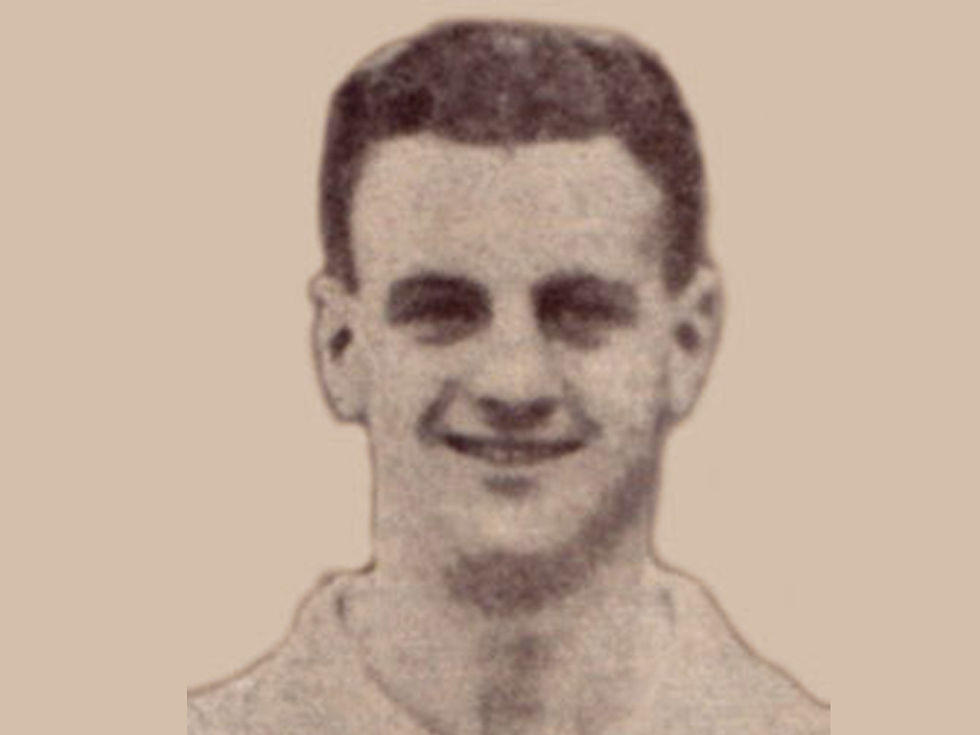
Any thoughts of a Rovers comeback were extinguished early in the second half when Hugh Doherty struck again, giving the visiting goalkeeper no chance and extending Dundalk’s lead to four. On 65 minutes the fifth goal arrived, George Stirling heading home from another Fallon cross. At 5–0, the contest appeared well and truly decided.
However, Shamrock Rovers refused to fold and mounted a spirited late response that injected drama into the closing stages. Eglinton pulled a goal back on 70 minutes after being set up by McAlinden, and two minutes later Farrell struck from 20 yards to make it 5–2. With ten minutes remaining Gregg burst through to score a third, despite strong appeals for offside, suddenly turning a comfortable afternoon into a nervous finish. Dundalk, however, held firm to secure a famous victory.
In The News
The funeral of General George S. Patton took place in Luxembourg, where he was laid to rest near the scene of his army’s breakthrough during the Battle of the Bulge just a year earlier. In Moscow, Jozef Stalin held further talks with U.S. Secretary of State James F. Byrnes as post-war diplomacy continued.
Closer to home, Dundalk Urban Council debated the government’s plans to reintegrate demobilised servicemen through public employment schemes, confirming that veterans from the 1916–1923 period were included.
Around Town
Over Christmas, Dundalk’s entertainment venues were busy. Cinemas offered a wide variety of options from The Call of the Wild starring Clark Gable at the Magnet, One Body Too Many with Bela Lugosi at the Town Hall Cinema, or Sensations of 1945 at the Park Street Cinema, among many others.
Live entertainment was equally popular, with a grand variety concert at the AOH Hall in Blackrock and dances at the Eimear Hall and The Hut in Castlebellingham.


